
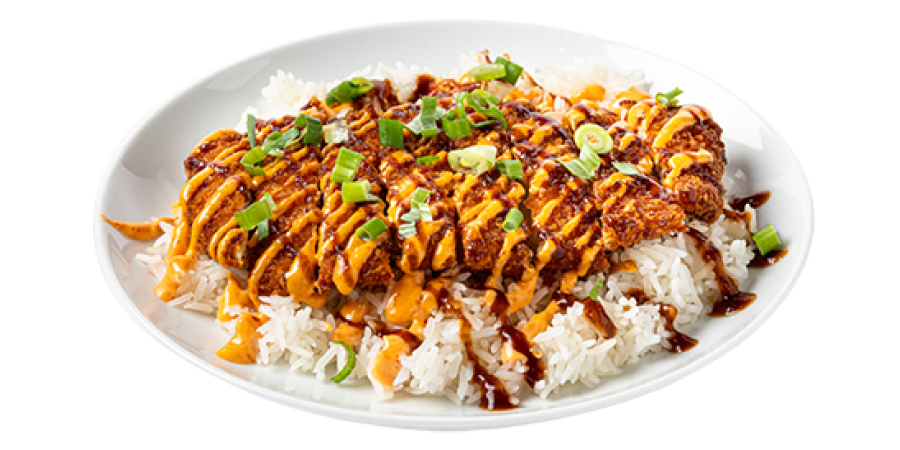
The tracked Chicken Katsu plate has 1,319 calories
The current June 2026 nutrition data lists Bonchon Chicken Katsu at 1,319 calories for a 20.6-ounce serving. That figure represents the complete prepared item captured by the nutrition row. It should be used as one plate total, not as chicken calories that must be added on top of a second estimate for the same meal.
Match both the dish name and serving weight before selecting the row in the calculator. A smaller cutlet, a kids portion, a modified plate, or a restaurant serving with different accompaniments may not match. When the local order differs, treat 1,319 calories as a planning reference rather than a measured result.
Breading, frying, rice, and sauce shape the total
Chicken katsu is more than an unbreaded chicken breast. The cutlet carries breading and cooking oil, and the menu plate may include rice, sauce, vegetables, or other accompaniments represented in the standardized serving. Replacing the complete row with a plain grilled-chicken estimate would omit major parts of the prepared dish.
The same caution applies when estimating each component separately. Unless the official source provides component rows, splitting the plate into guessed chicken, rice, and sauce values can count an ingredient twice or miss it entirely. Start with the complete Chicken Katsu entry and adjust only for a clearly documented customization.
The macro profile adds useful context
The tracked serving lists 67g fat, 115g carbohydrates, 8g fiber, 32g sugar, 65g protein, and 672mg sodium alongside its 1,319 calories. Protein is substantial, but so are the total energy, fat, and carbohydrates. The full profile is more informative than describing the meal only as a protein choice.
Compare complete rows when deciding between katsu, fried chicken, Bibimbap, Japchae, or fried rice. The highest-protein option is not automatically the lowest-calorie choice, and a lower sodium number does not make the serving small. Prioritize the nutrients and portion that matter to your own plan.
Estimate partial plates carefully
Eating half of a perfectly divided tracked plate would be about 660 calories. Three equal portions would average about 440 calories each. Those figures are simple arithmetic, not official serving sizes. The cutlet, rice, sauce, and vegetables may not be distributed evenly when diners split a plate or save leftovers.
Record the full restaurant plate first, then estimate the fraction consumed. If half the cutlet is eaten but most of the rice and sauce are finished, a flat 50 percent estimate can understate the meal. Notes about what remained are more useful than relying only on the number of cutlet pieces. Photographing the plate before sharing can also make a later estimate more consistent without claiming laboratory precision.
Add appetizers and drinks outside the plate
The Chicken Katsu row covers the tracked prepared plate, but it does not automatically include a separate order of potstickers, fries, Tteokbokki, wings, dessert, or a caloric beverage. Enter the katsu once in the calorie calculator, then add every additional item that reaches your place at the table.
For shared dining, build the whole order before dividing it. This prevents a substantial appetizer from disappearing behind the entree total. It also helps compare whether the katsu will be the meal anchor or one of several rich dishes shared by the group. Keep sauces and refillable drinks visible in the same estimate, even when they arrive separately.
Verify serving details and allergen information
Cutlet size, breading, frying oil, sauce, rice portion, sides, recipe, and availability can vary by restaurant or change over time. Confirm the current official nutrition document and local menu before using the tracked number as a precise total. Customizations should be considered separately when reliable information exists.
A calorie row does not establish allergen safety. Breading, sauces, cooking oil, and shared equipment can involve ingredients or cross-contact that matter for a specific diet. Review official allergen guidance and ask restaurant staff when allergies, medical restrictions, or strict nutrition targets require current preparation details.