
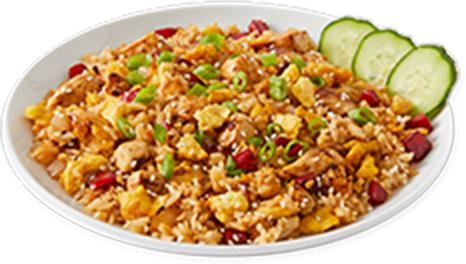
Bonchon House Fried Rice ranges from 977 to 1,379 calories
The current local nutrition data lists Bonchon House Fried Rice from 977 to 1,379 calories, with the final number depending on the protein choice. That is the direct answer to the Bonchon House Fried Rice calories question when your serving matches the restaurant row. Use the range as a supported menu reference rather than choosing one number without checking whether your order contains chicken, bulgogi, or pork belly.
Fried rice can look like one simple bowl, but rice, oil, vegetables, seasoning, sauce, egg, and protein all belong to the preparation. The visible protein is not the whole calculation. Start with the complete item and then confirm the selected variation on the current local menu. A different portion or limited-time recipe should be recorded as an estimate.
Protein choice is the reason the range matters
A 977–1,379 range communicates more honestly than a single universal headline. Chicken, bulgogi, and pork belly have different fat and calorie contributions, even when the rice base is similar. Select the row that matches the protein printed on your receipt. Do not use the lowest value simply because it is convenient, and do not add another meat entry when it is already included in the selected fried-rice serving.
If the menu only provides a broad range for your local order, keep that uncertainty visible. The calculator can show a low and high planning case, while the nutrition page provides the source context. This is more useful than pretending that a precise number applies to every restaurant, scoop size, topping, or protein substitution.
Avoid double counting rice, egg, and add-ons
The complete fried-rice row already represents the rice preparation. Adding a separate steamed-rice entry would count a second starch that was not ordered. Apply the same check to egg, vegetables, seasoning, and protein. Add a calculator item only when the receipt shows a separate extra portion. If a topping was omitted, the official complete-row number may no longer be an exact match.
Separate table items should remain separate: wings, dumplings, kimchi, pickled radish, fries, drinks, and dessert can all be added when purchased. Keeping them distinct makes a group total easier to review. It also helps explain why two diners who order “fried rice” may have very different totals after sides and protein choices are included.
Plan a bowl for one person or for sharing
For a solo diner, enter one complete serving and choose the protein that appears in the order. For two people sharing one matched serving, divide the selected total only as a rough planning exercise. A person who takes most of the pork belly or the larger scoop of rice will not have consumed the same fraction as someone who eats mostly vegetables.
When leftovers are saved, estimate the fraction eaten and connect the remainder to the original order. Never enter a second full bowl merely because the food was eaten on another day. A clear note about sharing, leftovers, and substitutions is valuable when the supported nutrition range is already wider than a single exact figure.
Review the complete nutrition picture
Calories are only one part of a fried-rice decision. Rice contributes carbohydrates, cooking fat can change total energy, and the protein choice affects fat and protein. Sodium may also be meaningful in a seasoned restaurant dish. Use the official nutrition page for the current row and avoid using a homemade fried-rice database entry as though it described this restaurant preparation.
Allergen needs require separate confirmation. Soy, wheat, egg, sesame, dairy, and shared cooking equipment may matter depending on the recipe and kitchen process. Ask local staff for current ingredient and cross-contact information. The calculator can support meal planning, but it cannot certify a safe meal or replace official allergen guidance and professional advice.
Confirm your protein before checkout
Before ordering, check the current Korean dishes menu for the available protein options, serving size, price, and local availability. Confirm whether an extra protein or side has been added and save the receipt. If the restaurant changes the recipe or portion, use the closest supported range and label your result as an estimate rather than carrying forward an old assumption.
The best workflow is simple: choose House Fried Rice, select the protein, add distinct items once, and compare the result with the nutrition page. The menu and article hub can help you explore related dishes, while official Bonchon ordering remains the place to verify the order itself. That keeps the 977–1,379 calorie range practical and transparent for real meals.