
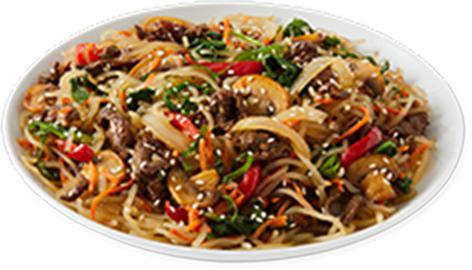
The tracked Japchae serving has 887 calories
The current June 2026 nutrition data lists Bonchon Japchae at 887 calories for a 15.3-ounce serving. That number represents the complete tracked noodle dish, so it already accounts for the glass noodles, vegetables, seasoning, sauce, and cooking fat included in the standardized preparation represented by the source row.
Use 887 calories when the restaurant portion and preparation match that 15.3-ounce reference. It is not a calorie value for plain noodles alone, and it should not be added to another Japchae base. Any chicken, fried appetizer, side, dessert, or caloric drink ordered with it still needs its own entry.
Glass noodles do not make the whole dish light
Japchae is commonly built around sweet potato glass noodles, but an ingredient name does not determine the total for a restaurant plate. The tracked serving combines a substantial noodle portion with vegetables, sauce, seasoning, and oil. Each part contributes to the finished dish even when the noodles look lighter or more translucent than wheat pasta.
A homemade recipe, a small side portion, and a full restaurant order can have very different weights and preparation methods. Avoid borrowing a number from a smaller bowl or a generic database entry. The serving weight is the most useful checkpoint for deciding whether the Bonchon row is a reasonable match.
Review carbohydrates, fat, protein, and sodium together
Along with 887 calories, the tracked Japchae row lists 39g fat, 115g carbohydrates, 5g fiber, 25g sugar, 22g protein, and 2,322mg sodium. The high carbohydrate total reflects the substantial noodle base, while the fat and sodium show why sauce and cooking method matter to the complete profile.
Japchae provides some protein, but the 22g listed in this serving does not turn the dish into a direct substitute for every chicken entree. Compare the whole row with your needs. A choice that fits a calorie target may still require attention to sodium, carbohydrates, or portion size.
Divide a shared order after confirming the full portion
If two diners divide the tracked Japchae evenly, the simple planning average is about 444 calories per person. Four equal shares would average about 222 calories each. These figures are arithmetic portions of one 887-calorie order, not official restaurant serving sizes and not guarantees that every plate receives the same amount.
Noodles can be difficult to divide visually, especially after serving from a shared container. Record the full dish first and estimate the fraction you actually ate. If leftovers remain, keep them attached to the original order total rather than entering a second complete order when they are eaten later. A kitchen scale can help at home, but it cannot reconstruct restaurant ingredients or sauce distribution.
Count chicken and starters outside the Japchae row
Japchae is often paired with Soy Garlic or Spicy chicken, but the 887-calorie row does not include a separate chicken order. Enter Japchae in the calculator, then add the exact wing, drumstick, strip, boneless, or combo row. Do the same for potstickers, fries, rice, and drinks that reach the table.
This full-order approach is more useful than labeling Japchae as either a side or a main dish. Its role changes with the table. A shared taste beside chicken is different from eating most of the container as an entree, even though both situations begin with the same tracked restaurant order.
Check current ingredients, serving size, and availability
Restaurant recipes, portion weights, vegetable mixes, oil, sauce, and availability can change. Use the current official nutrition information and local ordering details to confirm that the dish still matches the 15.3-ounce reference. A visibly different size or modified recipe should be treated as an estimate rather than an exact match.
The nutrition row is not an allergen statement. Noodles, sauces, seasonings, and shared cooking equipment may involve ingredients or cross-contact that matter for a specific diet. Ask the restaurant and review official allergen resources when allergies, medical restrictions, or strict dietary targets make those details important.