
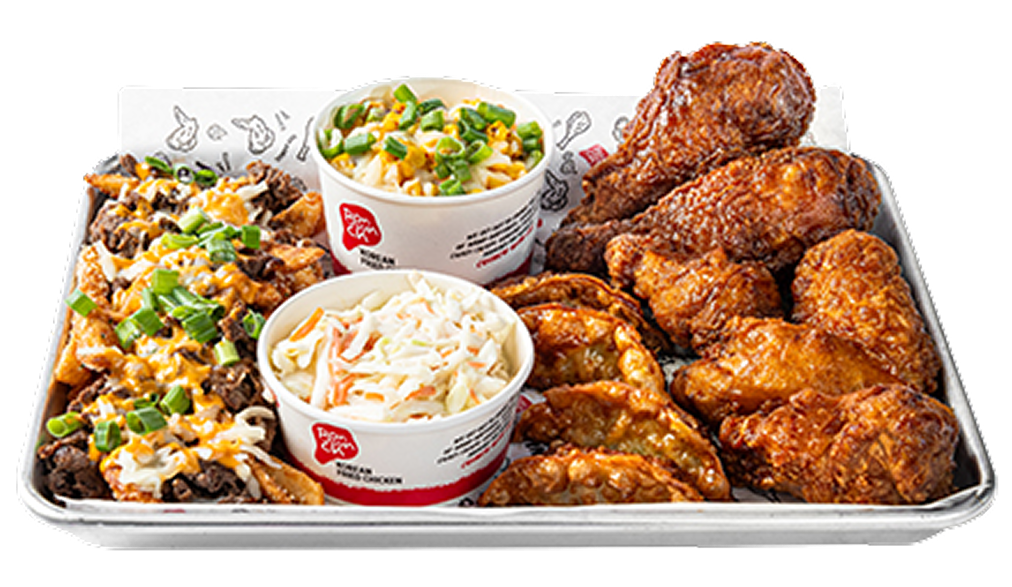
Bonchon Seoul Sampler is about 1,460 calories
The current local menu data lists Bonchon Seoul Sampler at about 1,460 calories for the tracked complete platter. That is the direct answer to the Bonchon Seoul Sampler calories question when the restaurant order matches the listed assortment and portion. Because it is a shareable appetizer, the number describes the whole tray rather than one person’s plate or one individual piece.
A sampler combines several foods, sauces, and textures, so counting one visible item cannot describe the whole order. Start with the complete sampler row in the calculator and verify the current local menu. If the assortment changes, a component is missing, or the portion differs, keep the result qualified as a planning estimate instead of presenting 1,460 as universal.
Record the platter once before dividing it
The cleanest group-tracking method is to enter one complete Seoul Sampler order, then estimate each person’s share. If four diners divide a matched platter evenly, the arithmetic average is about 365 calories each. If two people share it evenly, the average is about 730. These are mathematical planning splits, not official individual servings, because diners rarely take identical amounts of every component.
Do not enter the sampler once for every person. That multiplies the total and can make a shared appetizer look several times larger than the actual order. Conversely, do not log only one piece while ignoring the rest of the platter. Note who ate what, how much remained, and whether extra sauce or sides were added for a more honest estimate.
Account for components without double counting
A sampler row is intended to represent its listed assortment. If it already includes dumplings, fried items, sauces, or other starters, do not add those same components again from separate calculator rows. Add an item only when the receipt shows a genuinely separate order or an extra portion. This is especially important when the tray resembles several menu cards placed together.
If your table ordered a sampler and additional wings, fries, kimchi, drinks, or dessert, keep each extra item separate. The full table total then shows exactly what was purchased, while a personal estimate can be made from the amount served. The appetizer category helps you compare a sampler with smaller single-item starters using matching serving definitions.
Use the sampler for table planning
A large shareable platter can be useful for a group because everyone can choose a different bite, but sharing changes the arithmetic. Build the complete table in the calculator before ordering. Then test a two-person, three-person, or four-person split and adjust for the food that each diner actually takes. This provides a range without pretending the portions are identical.
A sampler may be an appetizer rather than a full meal, but a person can still eat a large share of it. Add a separate main dish only when someone orders one. Do not assume the word appetizer means the calories are negligible, and do not assume a shared tray must be divided equally. The receipt and serving behavior give better context than the platter’s appearance.
Review current nutrition and allergen details
The 1,460-calorie figure is only one nutrition signal. A mixed platter can contain different amounts of breading, oil, carbohydrate, protein, sugar, and sodium across its components. Use the nutrition page and current serving row when comparing it with tacos, potstickers, takoyaki, bao, or a chicken meal. A generic estimate for one appetizer cannot replace the complete sampler row.
Mixed foods also make allergen questions more complex. Wheat, soy, sesame, egg, dairy, shellfish, and shared fryers may matter depending on the assortment and kitchen process. Ask the local restaurant for current ingredients and cross-contact information before ordering for an allergy or medical restriction. Calories are not a safety certification and the calculator cannot guarantee a suitable preparation.
Confirm what is in today’s platter
Before checkout, verify the current sampler components, serving size, price, sauce, availability, and ordering channel with official Bonchon information or the local restaurant. Menu assortments can change by location or season. Save the receipt so you can distinguish the complete platter from extra starters and estimate leftover portions without entering a second full sampler.
For the closest calculation, select Seoul Sampler once, use about 1,460 calories for the complete matched platter, then add only distinct orders. The calculator, menu, nutrition page, and article hub work together to show both the total and the context. This approach answers the calorie question clearly while respecting the uncertainty of shared food and local preparation.