
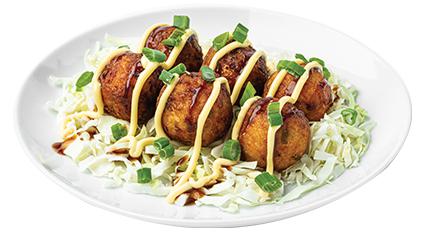
Bonchon Takoyaki is listed at 342 calories
The current June 2026 nutrition data lists Bonchon Takoyaki at 342 calories for an 8.1-ounce serving. That is the clearest answer to the Bonchon Takoyaki calories question when your order matches the tracked item and portion. The number describes the complete prepared serving represented by the nutrition row, not a generic estimate for one small ball or a plain piece of batter.
Use the 342-calorie figure as a planning reference, then confirm that your local menu still uses the same item and serving. A different count, topping level, dipping sauce, recipe, or restaurant configuration may not match the standardized row. Keeping the serving weight visible helps prevent a small appetizer label from being mistaken for the calories of an entire meal.
Treat the row as a complete appetizer, not a per-piece promise
Takoyaki is commonly served as a group of bite-sized pieces, but the nutrition source defines the tracked serving by the whole 8.1-ounce order. Without a confirmed piece count and a component-level source, dividing 342 by a guessed number of balls creates false precision. The restaurant may distribute sauce, garnish, and batter unevenly from one piece to the next.
The safest workflow is to record the complete order first. If you eat half of a visibly shared plate, use half of the listed total as a rough planning estimate; if you eat a few pieces, estimate the fraction of the actual order rather than inventing an official per-piece value. This approach also keeps a separate sauce cup or topping from being counted twice.
Calories are only one part of the Takoyaki row
The tracked serving lists 23g of fat, 35g of carbohydrates, 7g of fiber, 8g of sugar, 10g of protein, and 588mg of sodium alongside its 342 calories. That profile makes Takoyaki a flavorful starter with more than a token amount of energy, while still being much smaller than several complete chicken or Korean-dish plates in the calculator.
Macro context can change which pairing makes sense. Someone looking for a lighter shared bite may compare the appetizer with a full fried rice, noodle, or chicken row before adding more food. Someone prioritizing protein may want to treat Takoyaki as a starter and add a measured protein dish separately. The right choice depends on the whole meal, not one headline number.
Plan shared portions from the full plate
Two people dividing the tracked order evenly would average about 171 calories each. Four equal shares would average about 86 calories each. Those figures are simple arithmetic for the 342-calorie container, not official individual servings. They also assume the pieces, sauce, and toppings are distributed evenly, which may not happen when one diner chooses the most heavily dressed pieces.
For a more consistent estimate, enter the entire Takoyaki order in the calculator before the group starts eating. Note whether sauce remains in the cup, whether toppings are left behind, and how much of the plate each person takes. A rough fraction of a known complete serving is usually more honest than a precise-looking per-ball number built from an uncertain count.
Add the rest of the order separately
Takoyaki does not automatically include wings, boneless chicken, strips, rice, noodles, fries, dumplings, dessert, or a caloric drink ordered for the same table. Enter the 342-calorie appetizer once, then add each additional item and its exact serving. This is especially useful when Takoyaki is a small first course before a much larger Korean fried chicken meal.
The calculator can also help compare combinations before ordering. You might keep the Takoyaki and choose a smaller chicken count, share a rice dish, or skip a separate fried side. These are planning choices rather than nutrition prescriptions. The goal is to make every item visible so a shared appetizer does not disappear from the final meal estimate.
Confirm sauce, preparation, and allergen details locally
Takoyaki recipes, octopus or filling amounts, batter, cooking oil, garnishes, sauce coverage, portion sizes, and menu availability can vary by restaurant or change over time. Review the current official nutrition information and your selected restaurant menu before treating 342 calories as an exact match. If a local order looks materially different, use the row as context and record the difference.
The calorie table is not an allergen guarantee. Takoyaki batter, seafood filling, sauces, mayonnaise-style toppings, and shared cooking surfaces may involve ingredients or cross-contact that matter for a specific diet. Check current official allergen guidance and ask the restaurant directly when allergies, medical restrictions, or strict nutrition targets make preparation details essential.