
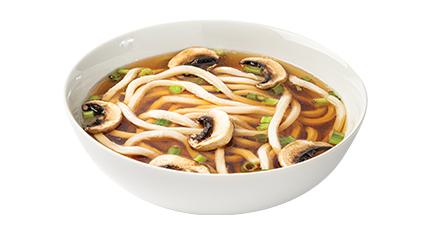
Bonchon Udon Noodle Soup starts at 480 calories
The current June 2026 nutrition data lists Bonchon Udon Noodle Soup at 480 calories for the tracked 33.3-ounce serving. That is the direct answer to the Bonchon Udon calories question for the base soup row. It describes the complete standardized preparation, including the broth and noodles represented by that serving, rather than a bowl of plain noodles or a small taste.
The same dataset lists supported additions at 580 calories with egg, 595 with seafood, and 683 with bulgogi. Choose the row that matches your order instead of adding a guessed topping amount to the base soup. A different bowl size, recipe, protein, or local menu configuration should be treated as an estimate until current official details confirm the match.
The full bowl is more than a noodle calculation
The 33.3-ounce serving includes the standardized soup preparation, so replacing it with a generic cooked-udon entry can omit broth, seasoning, garnishes, and any included ingredients. Conversely, adding a separate noodle or broth estimate on top of the complete row can double count the same food. Start with one supported complete row, then adjust only for a clearly documented customization.
Serving weight also explains why a bowl can feel substantial even when its base calorie number is lower than a fried entrée. Liquid volume, noodles, and protein affect fullness differently, and a restaurant container is not automatically an individual dietary serving. Use the listed weight to identify the row, not to make assumptions about how much of the bowl one person must eat.
Compare additions and the complete macro profile
The base Udon row lists 2g fat, 94g carbohydrates, 8g fiber, 18g sugar, 24g protein, and 4,300mg sodium. The egg row is 580 calories with 32g protein, the seafood row is 595 calories with 44g protein, and the bulgogi row is 683 calories with 39g protein. Each addition remains part of a complete bowl row rather than a free-floating topping estimate.
The sodium number is important context, but it should not be turned into a personal medical conclusion. People have different dietary needs, and the source is a planning reference rather than individualized advice. Review the entire row and your own guidance when sodium matters, especially if the bowl is paired with sauced chicken, kimchi, fries, or another salty dish.
Share the bowl from the complete total
Two people splitting the base tracked bowl evenly would average about 240 calories each. An even split of the bulgogi version would average about 342 calories each. These figures divide complete rows and do not establish official half-bowl servings. More noodles, broth, or protein may end up in one person’s portion, so a flat half is only a practical estimate.
Enter the full bowl in the calculator before sharing, then estimate the fraction each diner actually consumes. If leftovers are saved, keep them attached to the original order total and log the remainder later rather than counting a second full bowl. This method is especially helpful when the soup is one part of a larger family or takeout order.
Add chicken, sides, and drinks separately
The Udon row does not include wings, drumsticks, strips, boneless chicken, combos, rice, appetizers, dessert, or a caloric drink ordered alongside it. Add the exact base or protein-added bowl once, then enter every other menu item. This keeps a large shared spread from hiding behind one soup number.
Use the menu and calculator together to test a realistic combination. A diner might choose seafood Udon as the main dish and share a small starter, while a group may split base Udon alongside chicken and rice. The tool is designed to show those choices transparently; it does not decide which meal is appropriate for a person.
Verify broth, toppings, availability, and allergens
Broth recipe, noodle amount, protein portion, garnishes, substitutions, container size, and availability can vary by restaurant or change over time. Review current official nutrition information and the selected local menu before treating 480, 580, 595, or 683 calories as exact. If your bowl differs, use the closest supported row and label the result as an estimate.
Nutrition data is not an allergen guarantee. Wheat noodles, seafood, egg, soy-based broth, seasonings, and shared preparation equipment may matter for a specific diet. Consult official allergen information and ask restaurant staff when allergies, medical restrictions, or strict nutrition targets require current ingredient and cross-contact details.